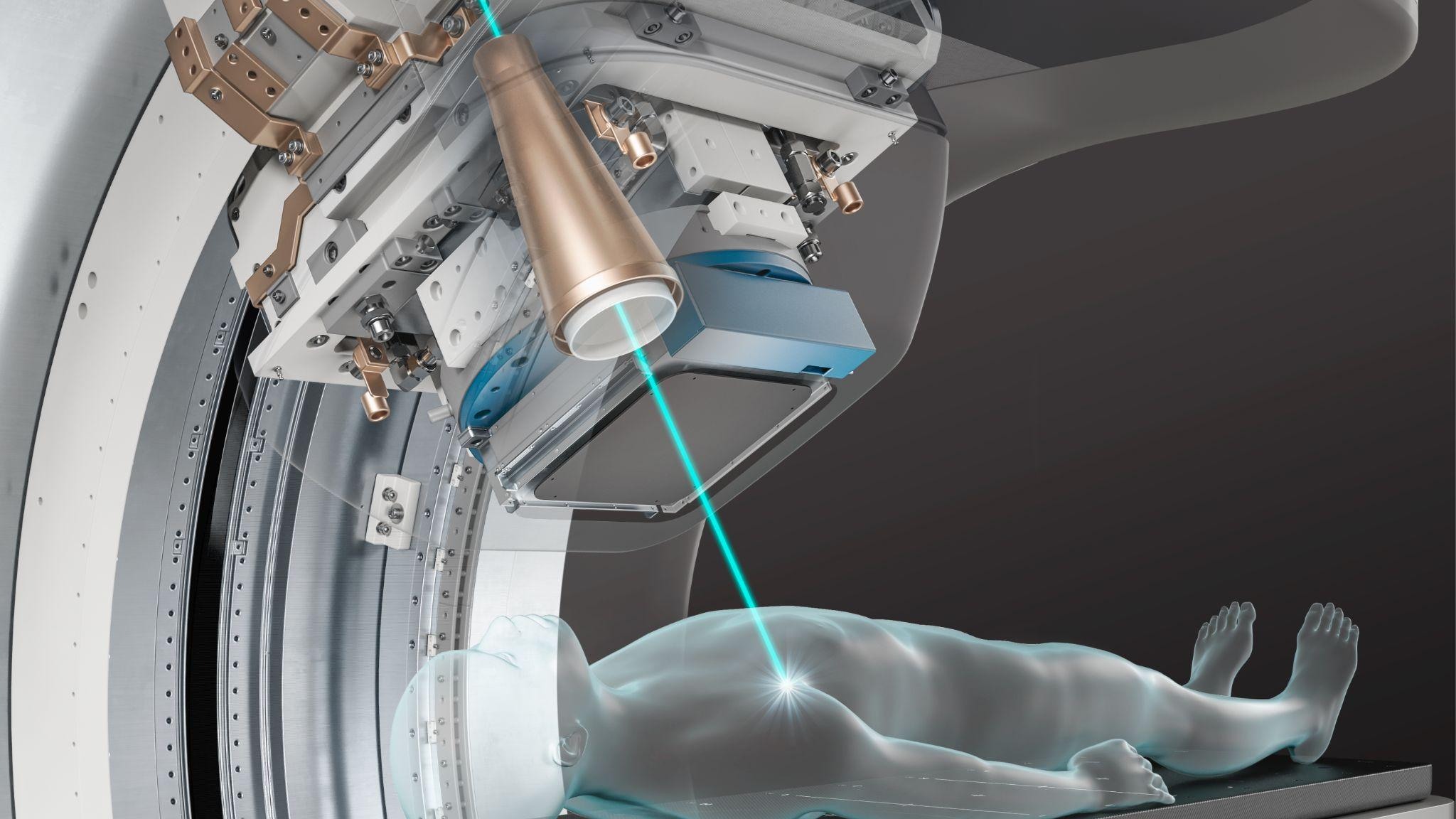
A compact proton therapy system, engineered for integration into hospital sites. Siyasi Healthcare supports institutional clients from importation through to long-term maintenance.
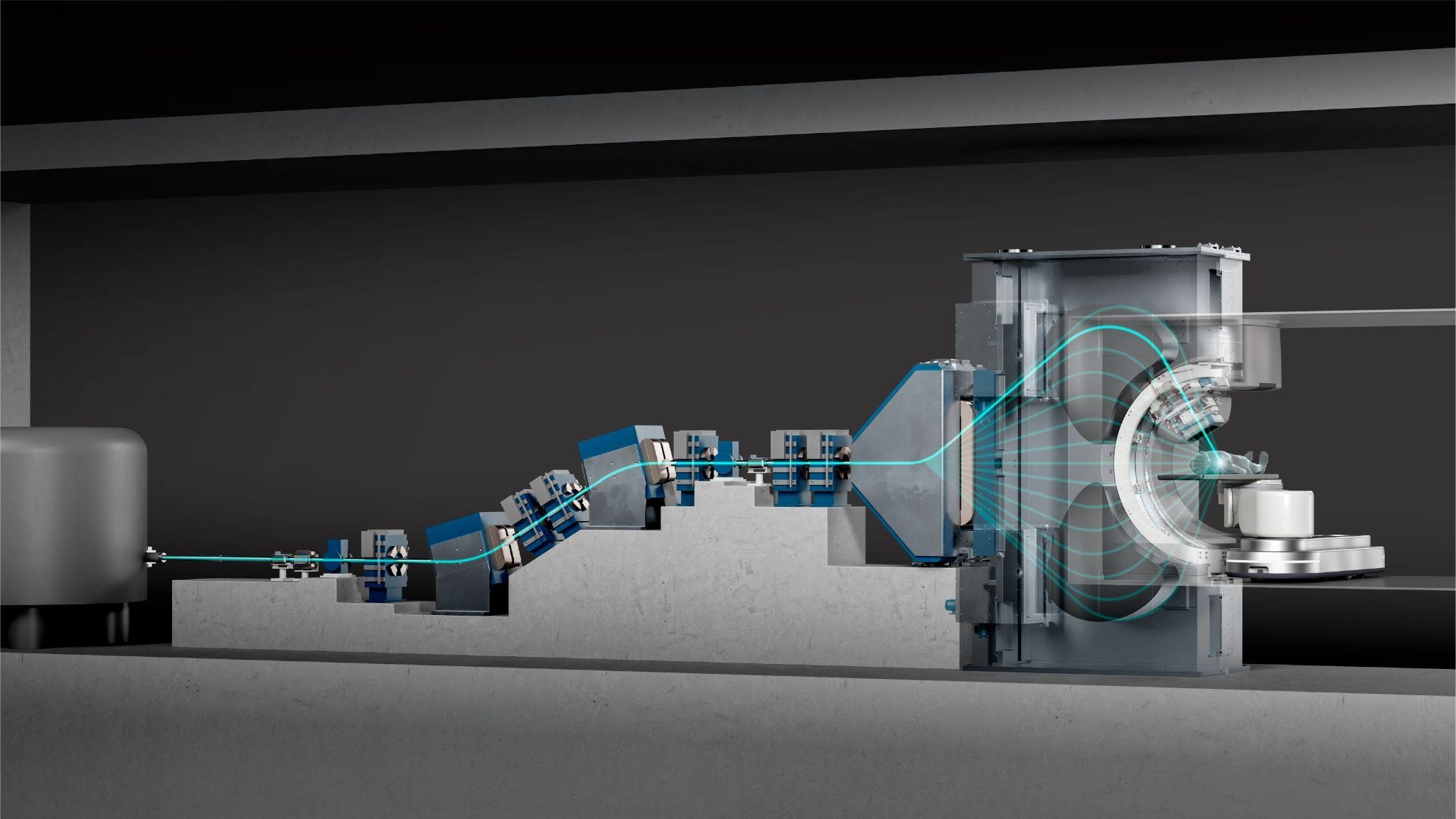
System architecture render, supplied by manufacturer
The particle beam originates at the injector stage before entering the acceleration beamline.
A sequence of magnets steers and shapes the beam path along the length of the system.
The gantry directs the beam toward the patient positioning couch from the required angle.
A robotic couch and respiratory-gating system support precise, repeatable patient positioning.
Phemto is designed around a compact magnetic-gantry concept. The distinction is not a consumer-style product feature; it is an engineering and infrastructure conversation for hospitals planning how advanced particle therapy could fit into a real clinical environment.
Manufacturer material describes a gantry system that uses electromagnets to change irradiation angle, rather than relying on the large conventional rotating-gantry architecture used by many particle-therapy systems.
The supplied B dot Medical material compares a 4m Phemto system height with a 12m conventional reference system and describes a reduced building footprint. For hospital planners, the relevant question is how advanced particle therapy can be considered within the constraints of site, structure, access, and capital planning.
The manufacturer presentation describes a short source-axis-distance scanning configuration, designed to support compactness while maintaining precise beam-delivery architecture.
Phemto materials describe a self-propelled treatment-table workflow, high-speed scanning, and respiratory-gating capability. These elements are relevant to treatment-room workflow, positioning, and the management of moving targets.
Rotational precision of the gantry assembly, positioning the beamline relative to the patient couch.
Multi-axis couch movement supporting fine patient positioning ahead of treatment delivery.
Scanning synchronized to respiratory motion, illustrating the system's approach to motion management.
Coordinated import of the system into the receiving country.
Support navigating the applicable regulatory pathway for the receiving institution.
Coordination with facilities and engineering teams ahead of delivery.
On-site installation and system commissioning ahead of clinical use.
Training for clinical and technical staff operating the system.
Continued technical support and maintenance coordination.